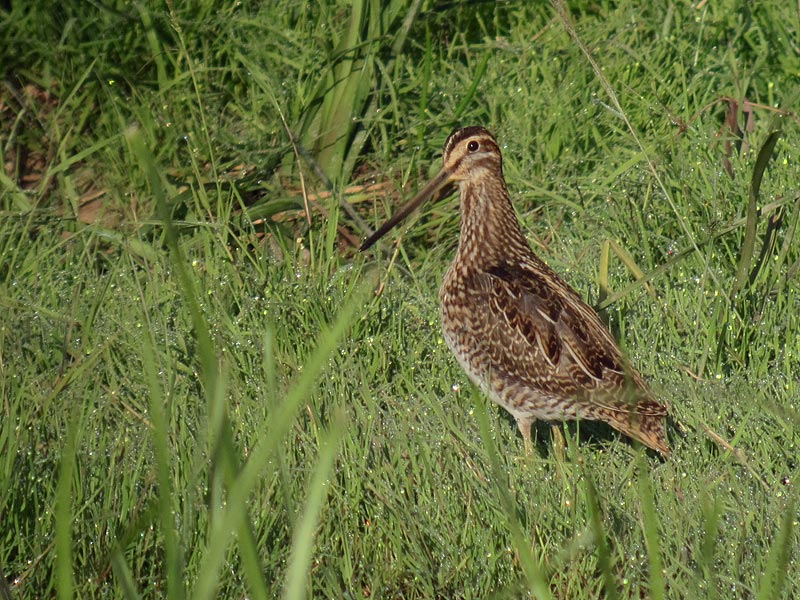
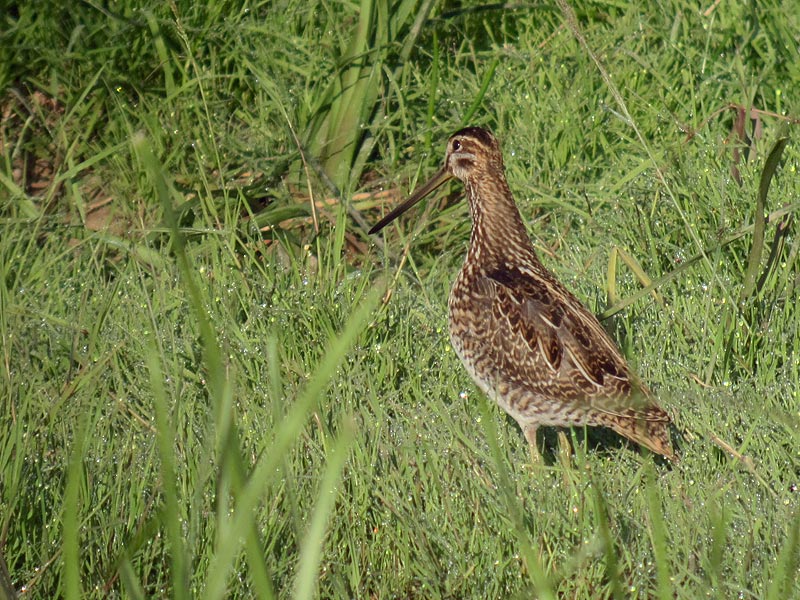
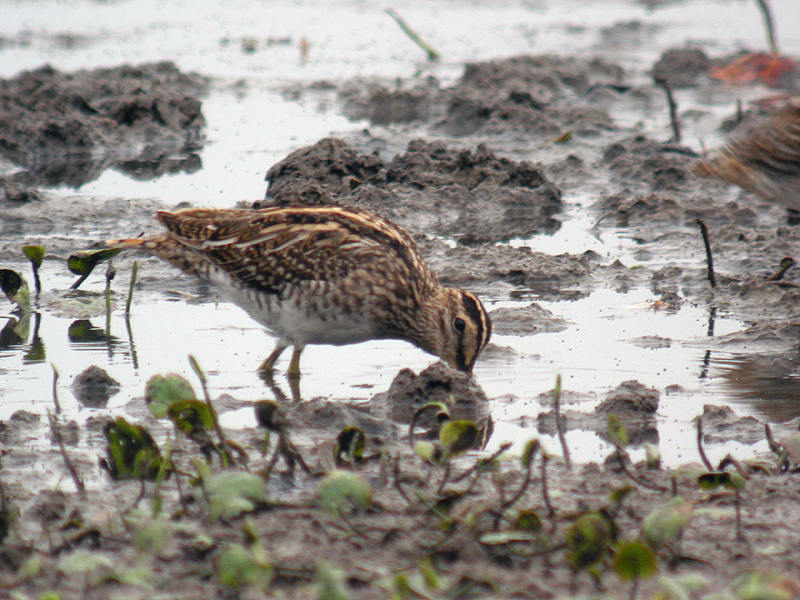
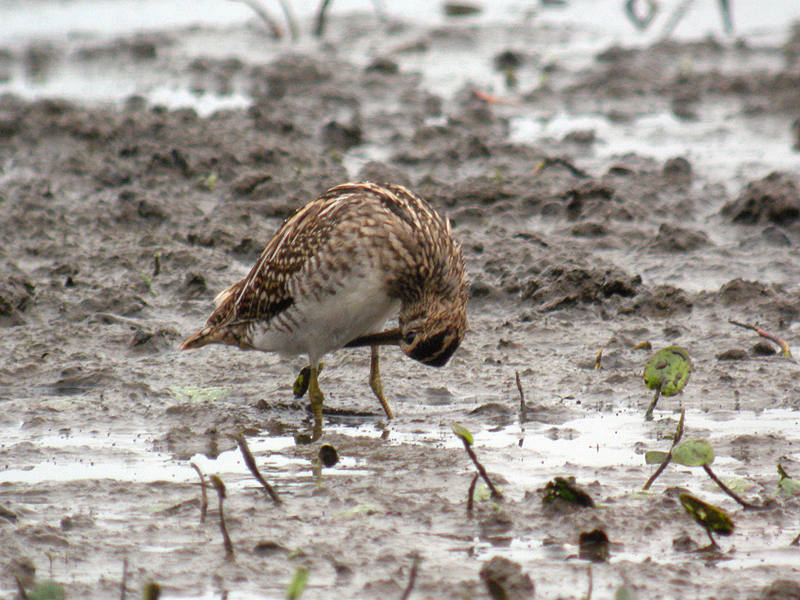
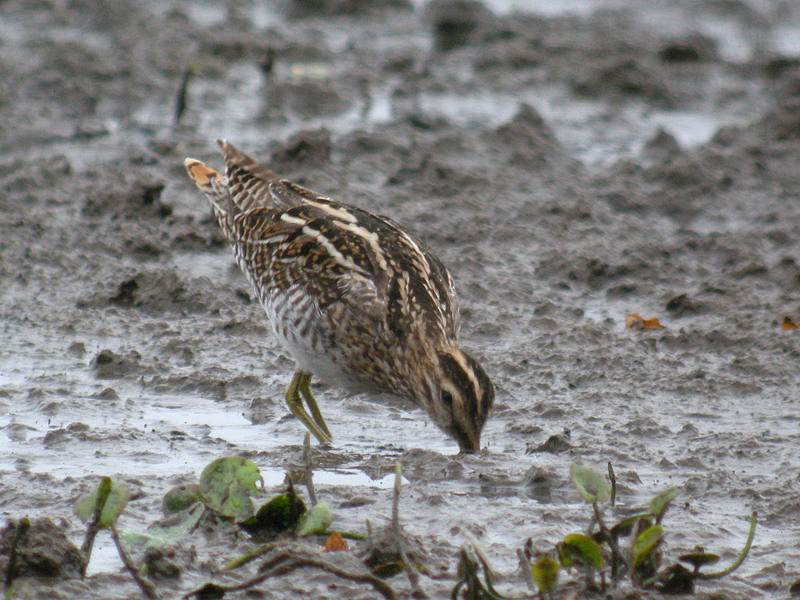
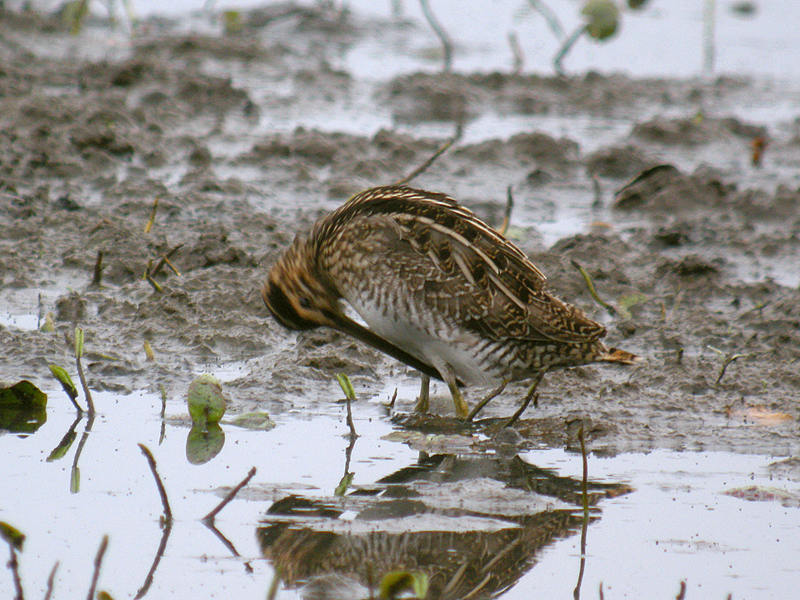
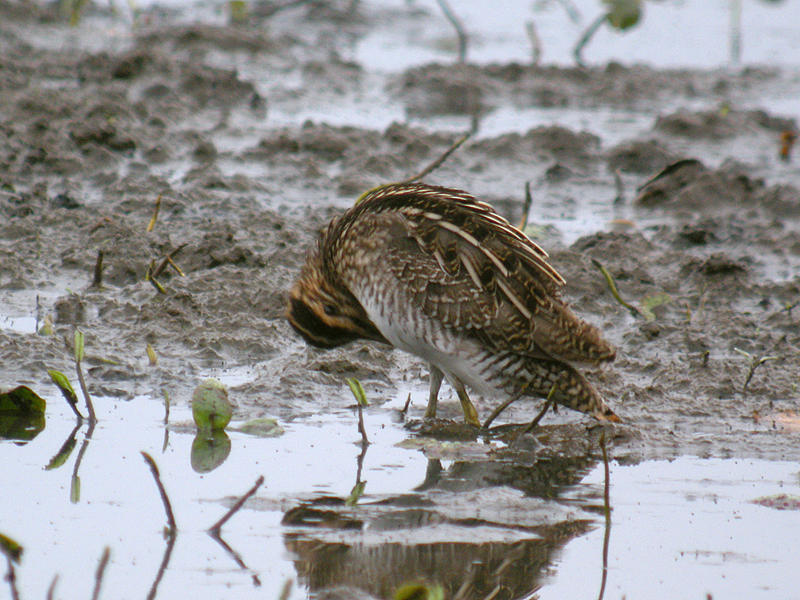
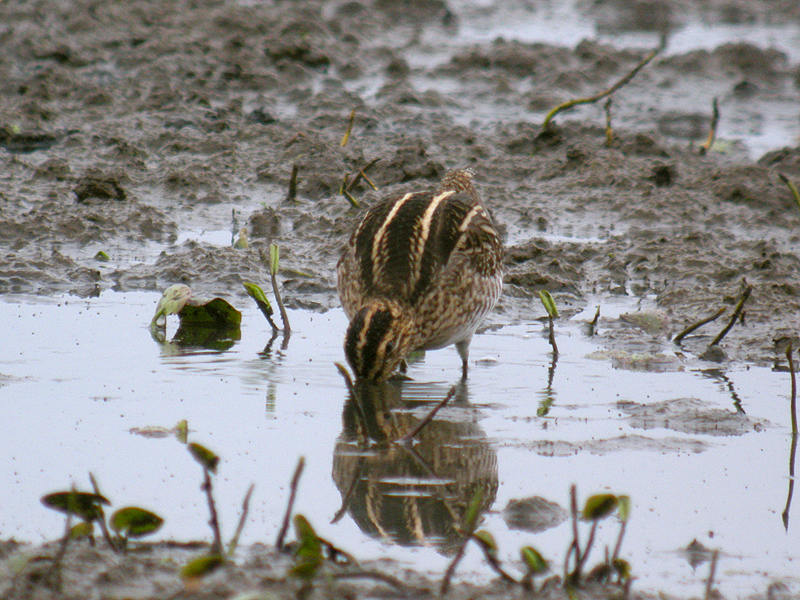
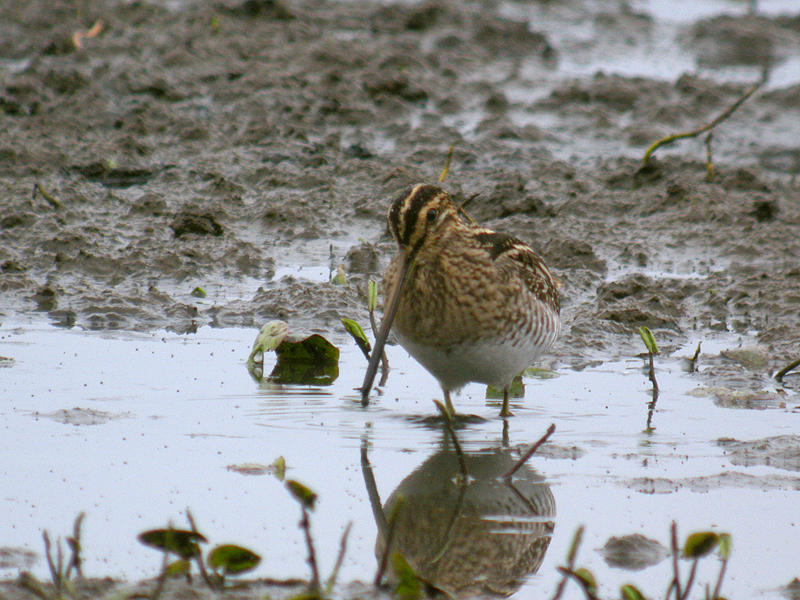
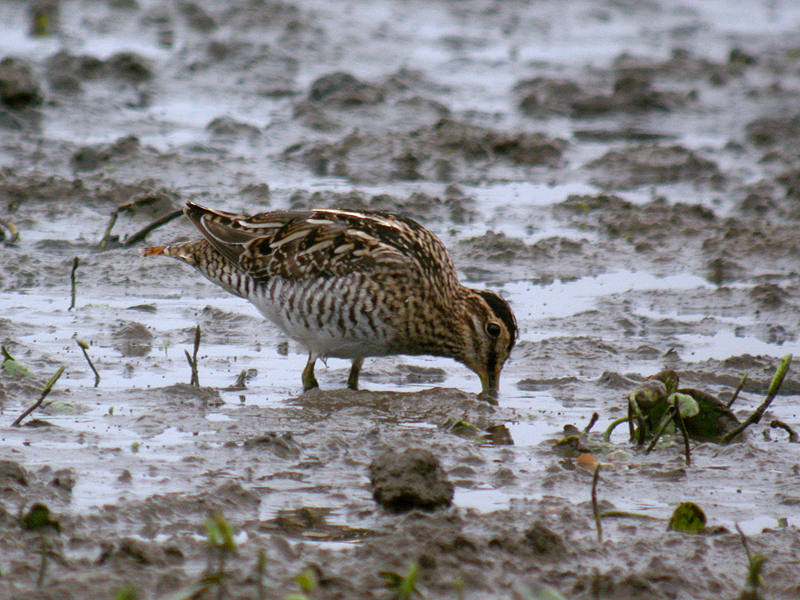
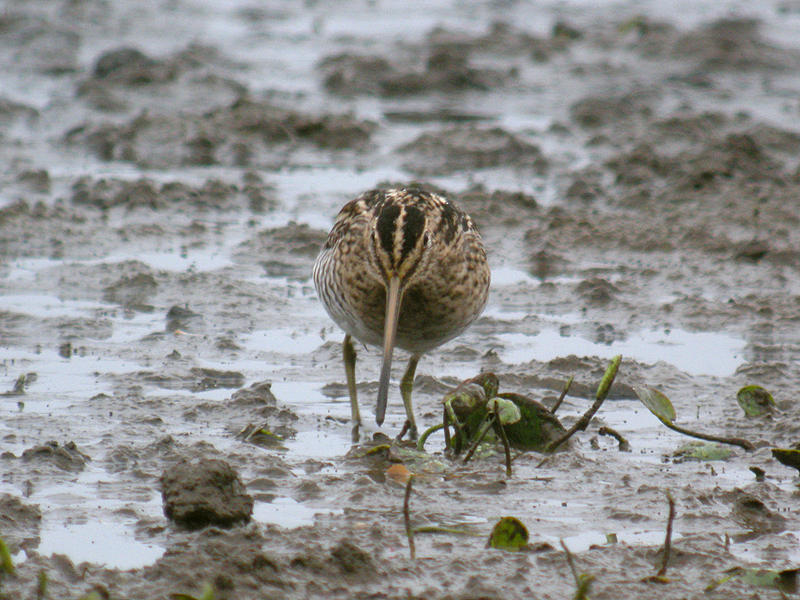
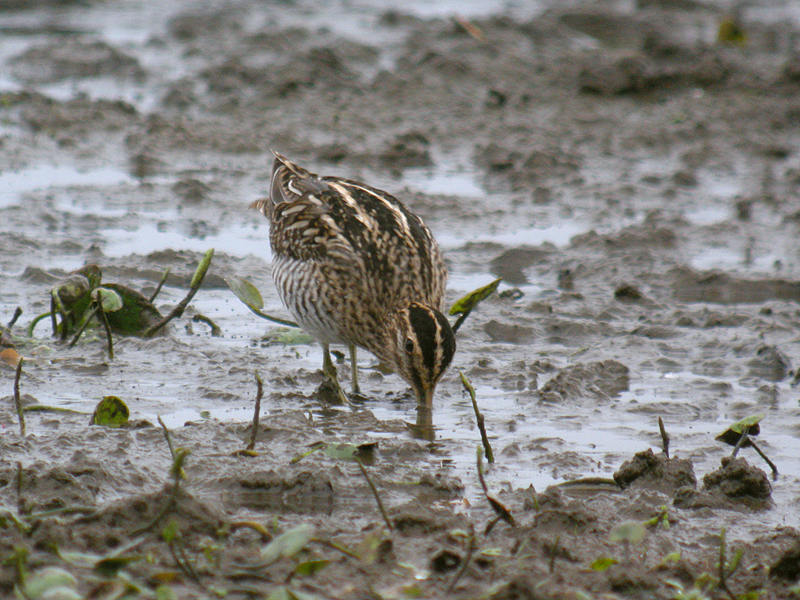
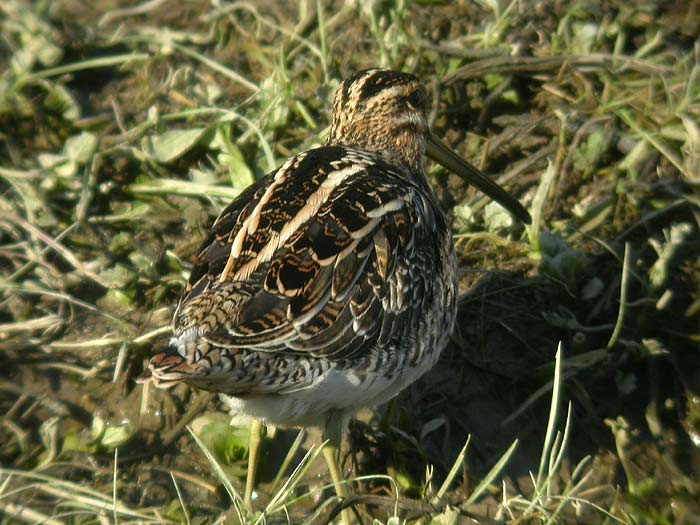
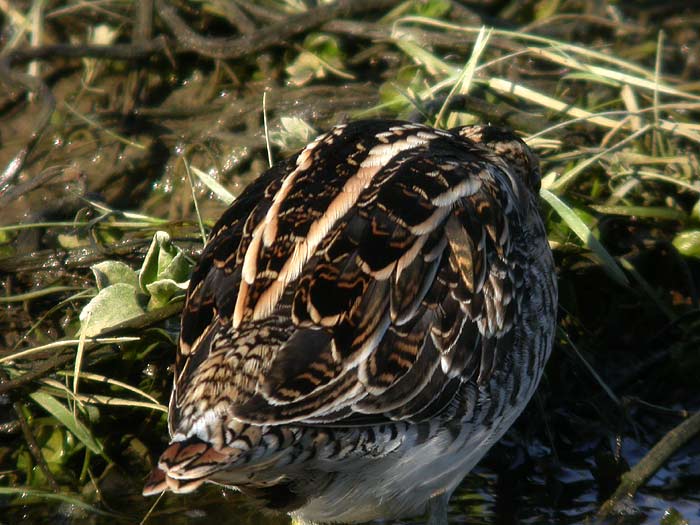
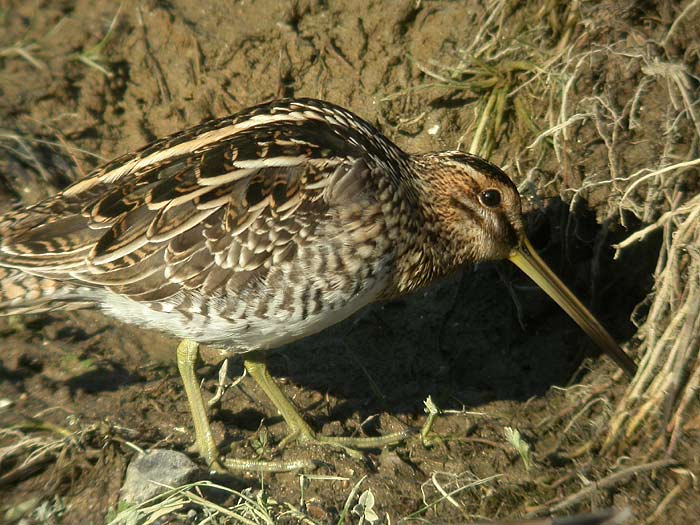
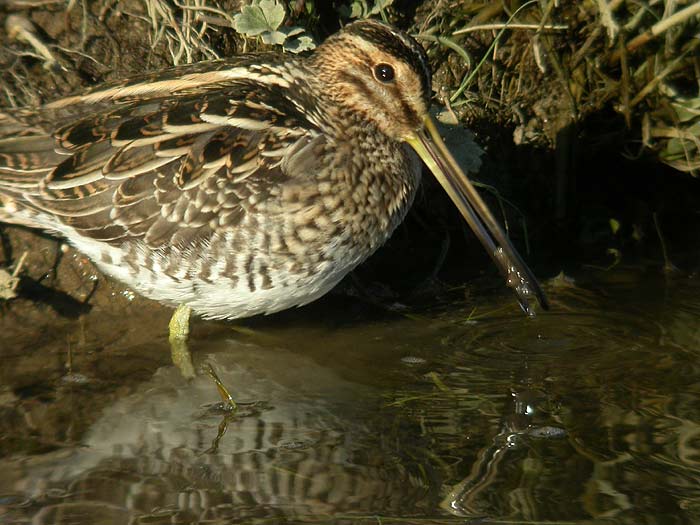
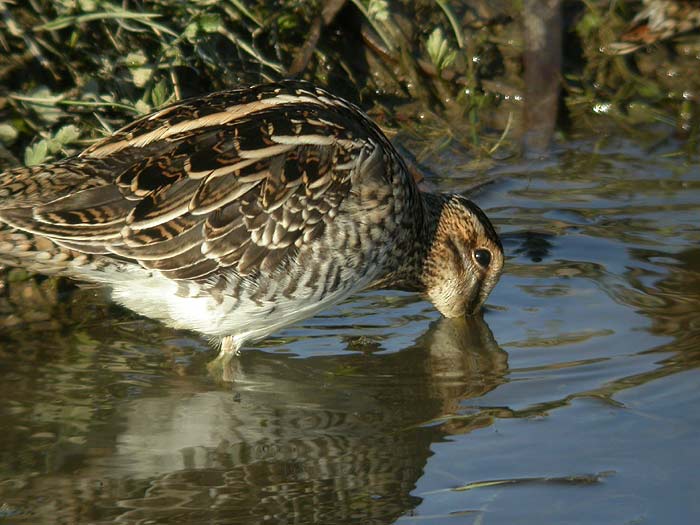
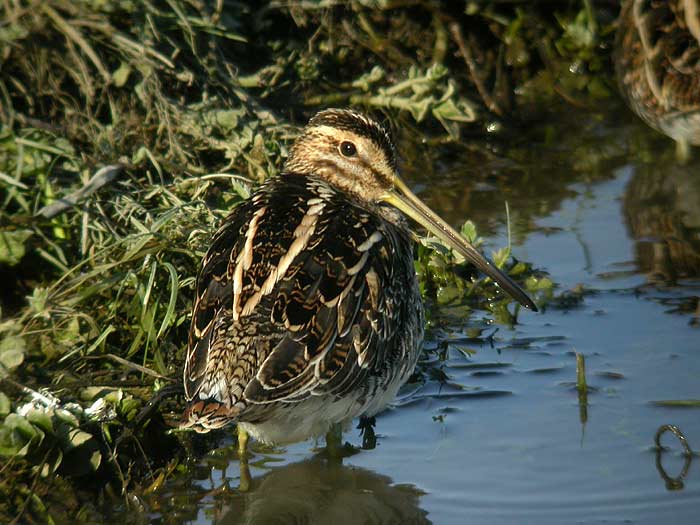
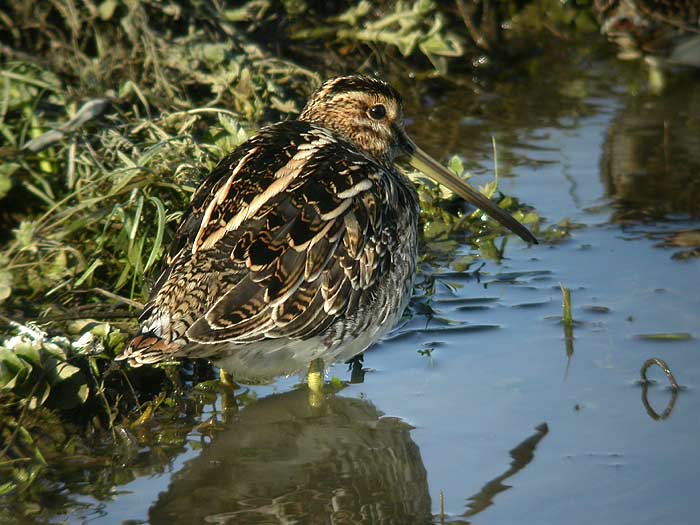
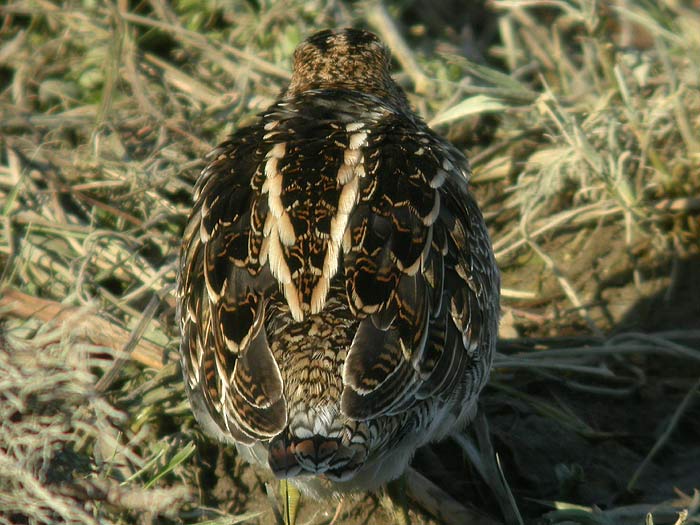
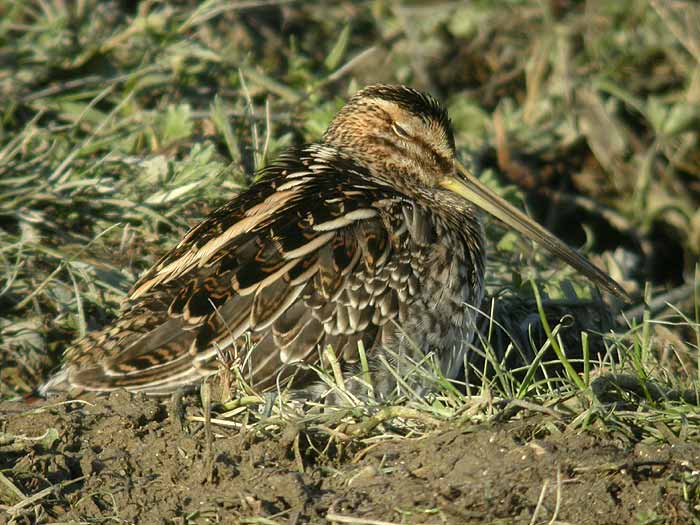
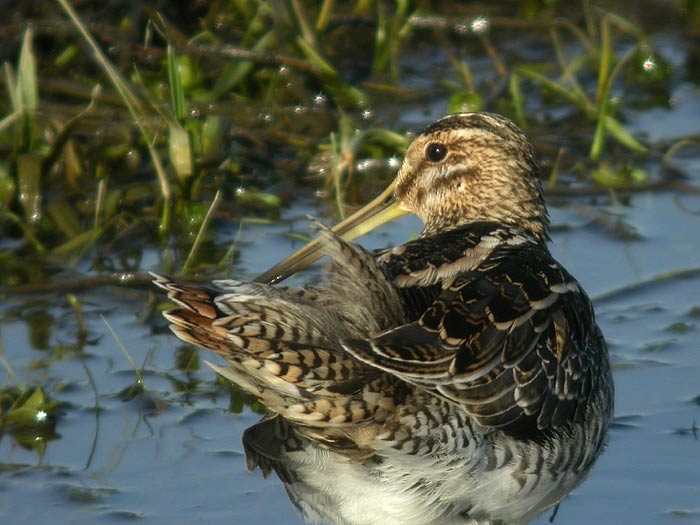
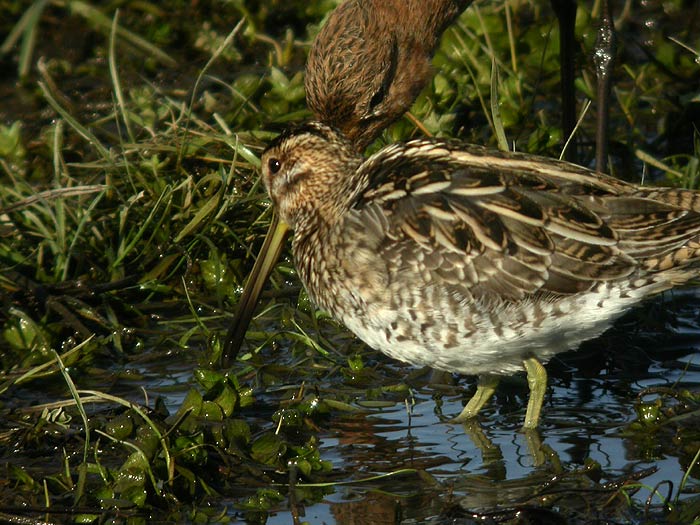
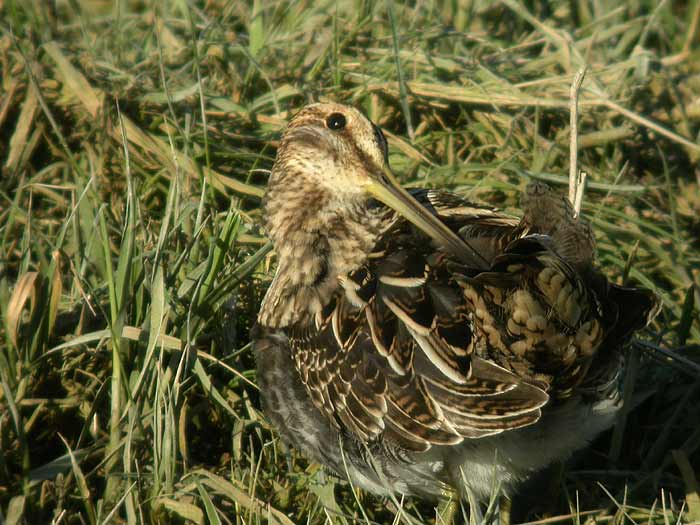
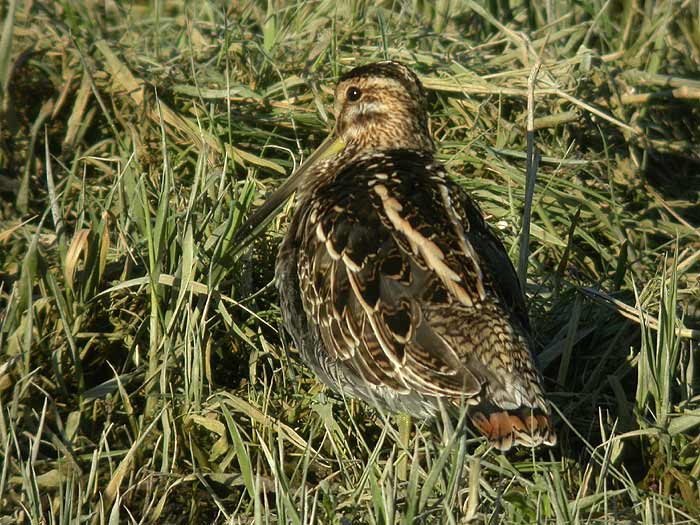
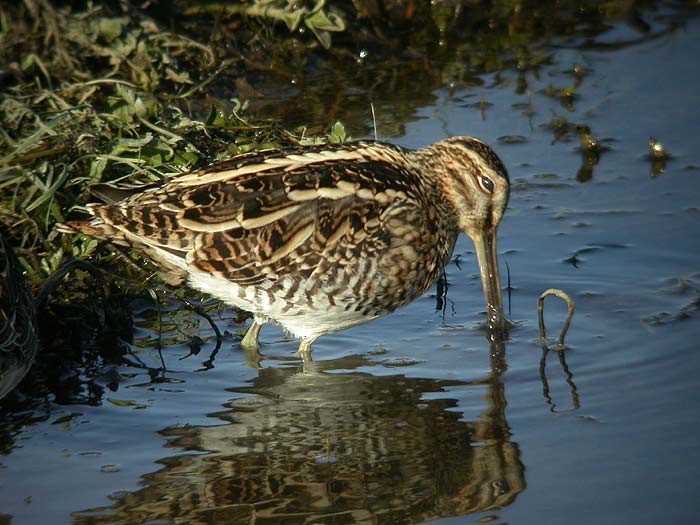
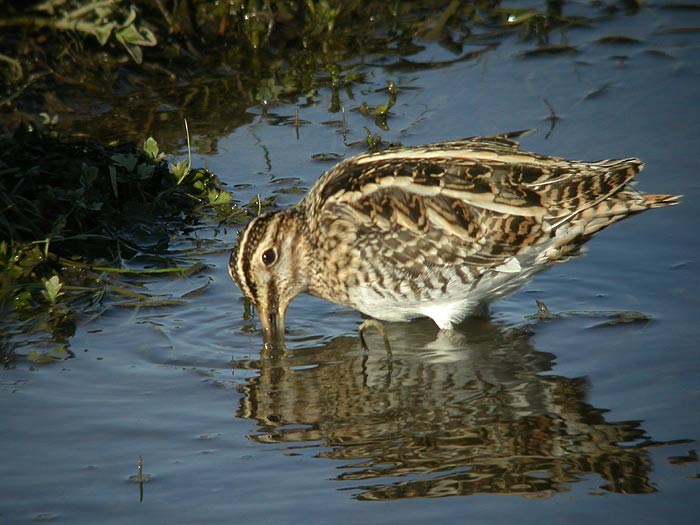
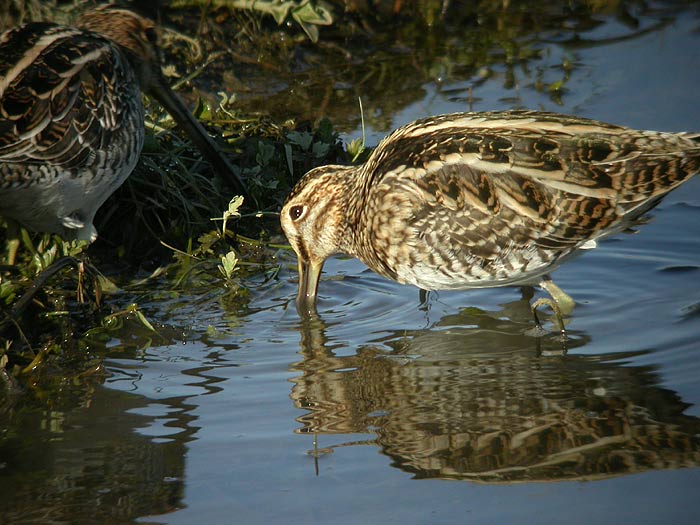
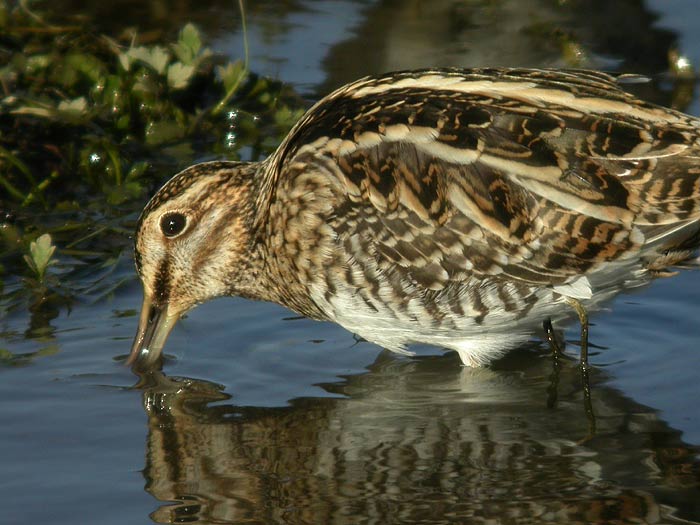
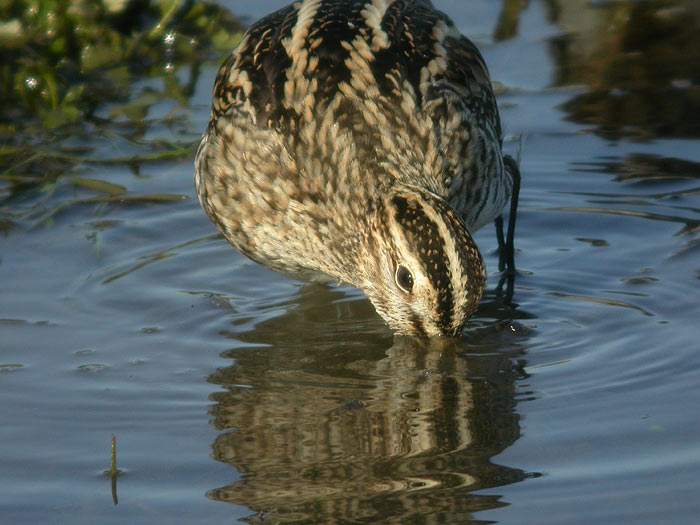
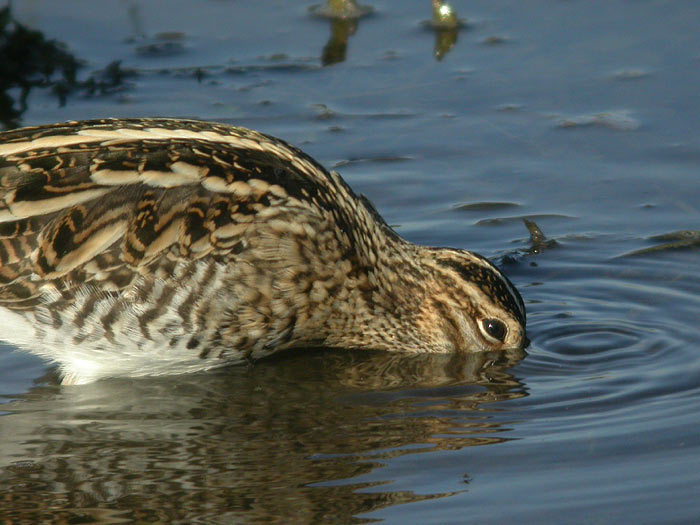
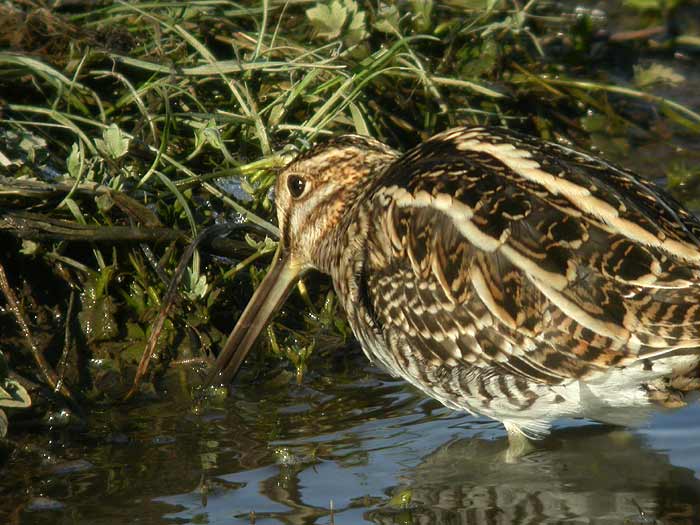
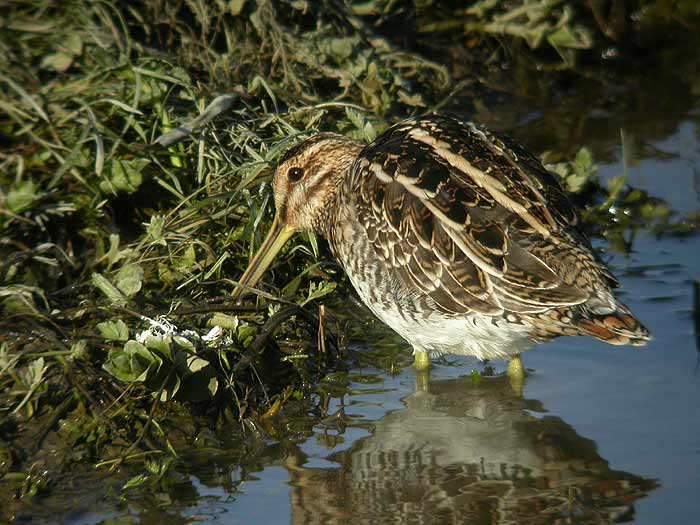
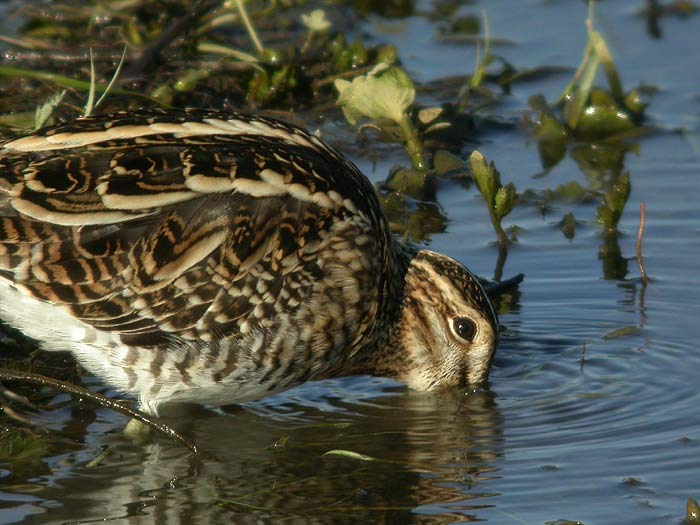
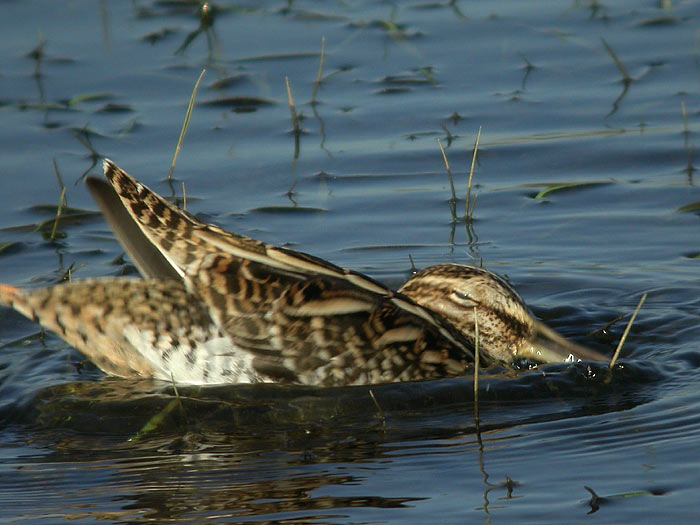
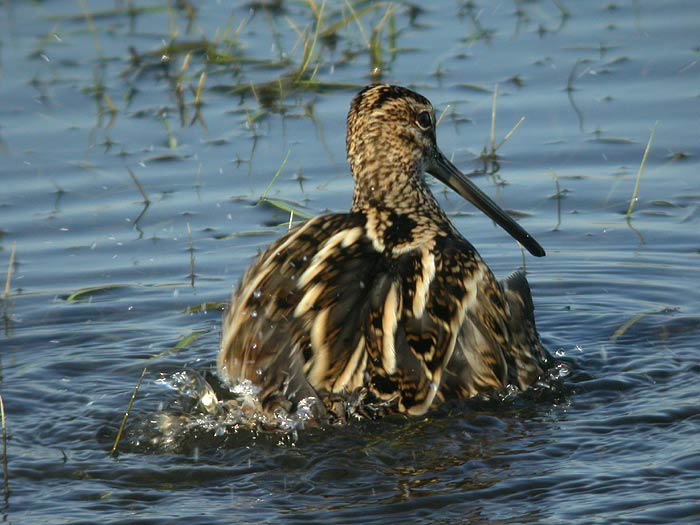
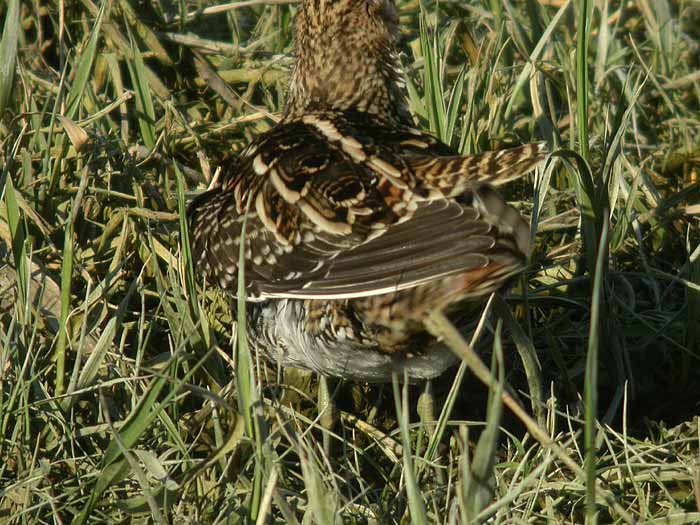
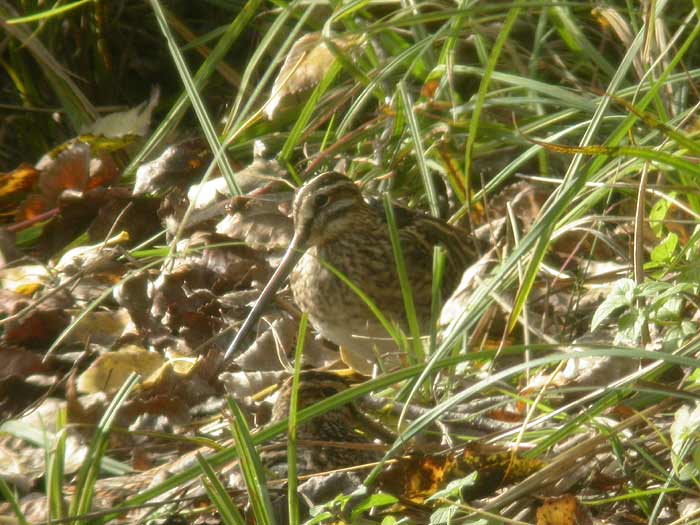
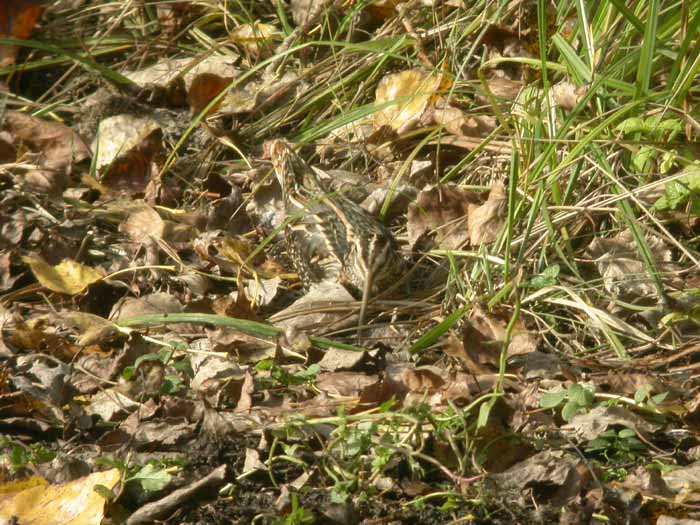
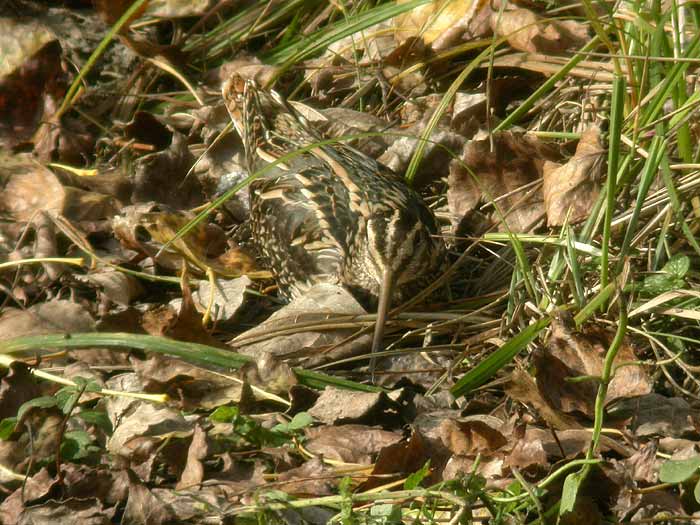
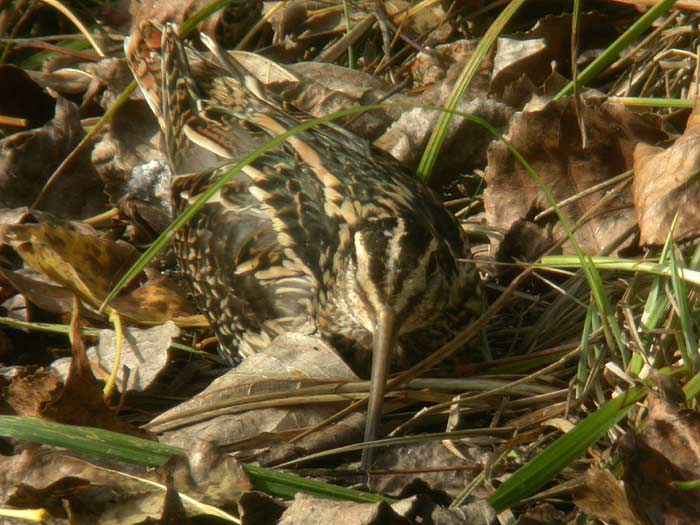
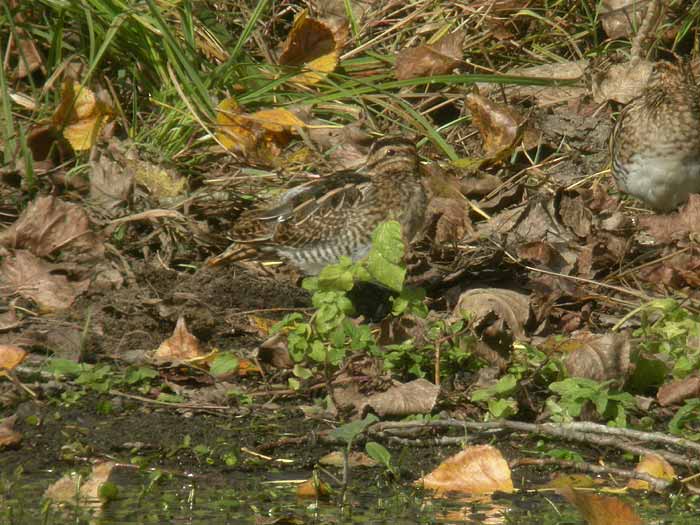
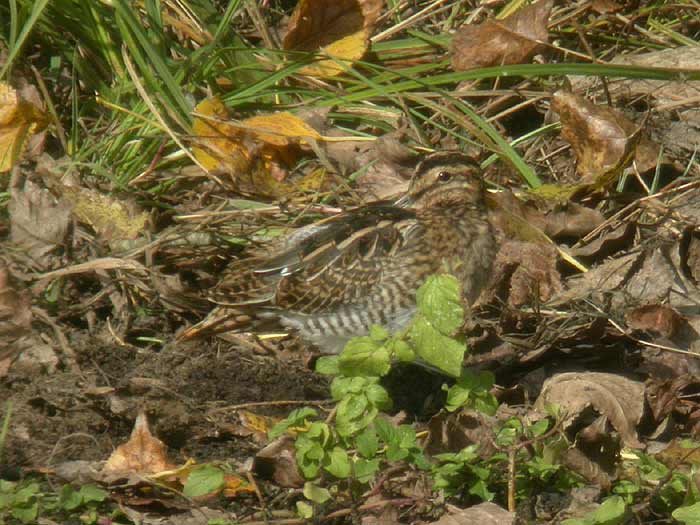
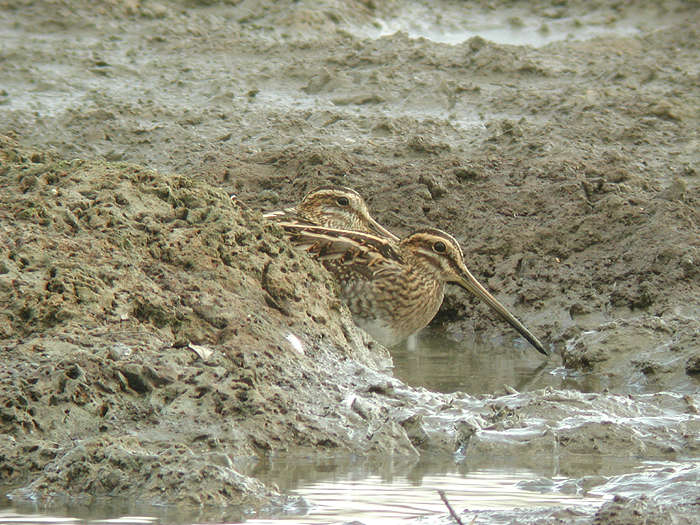
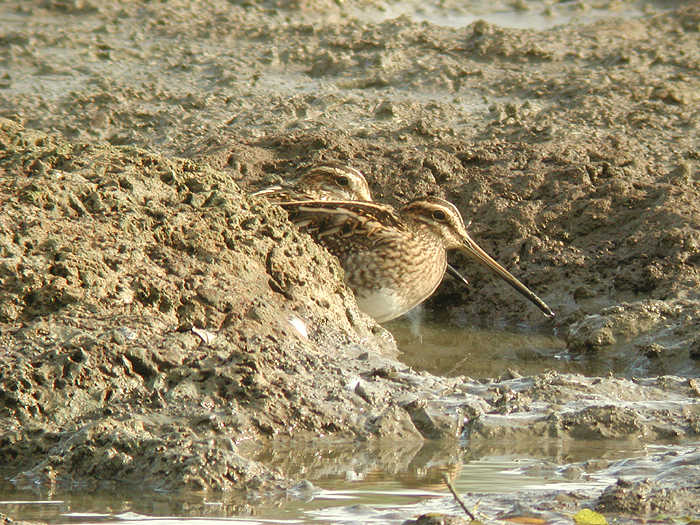
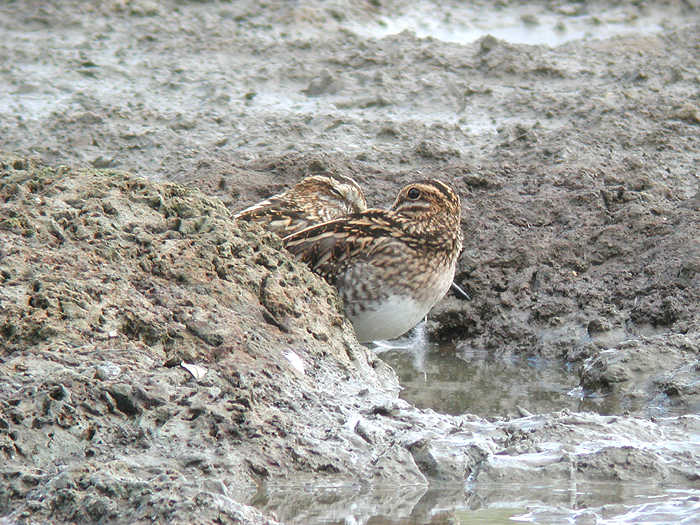
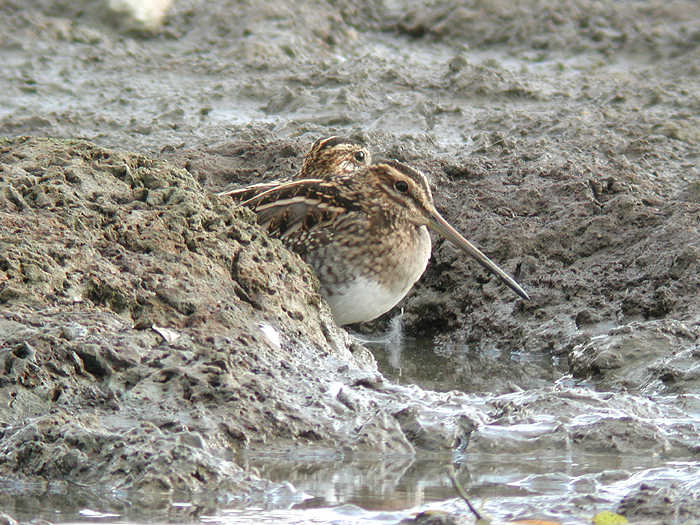
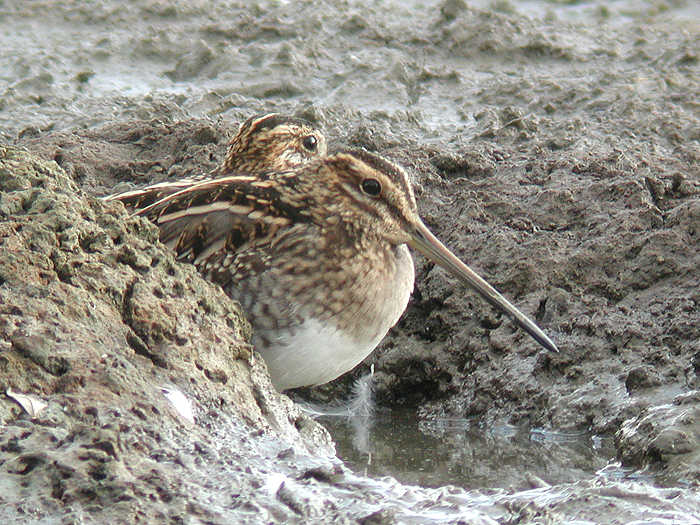
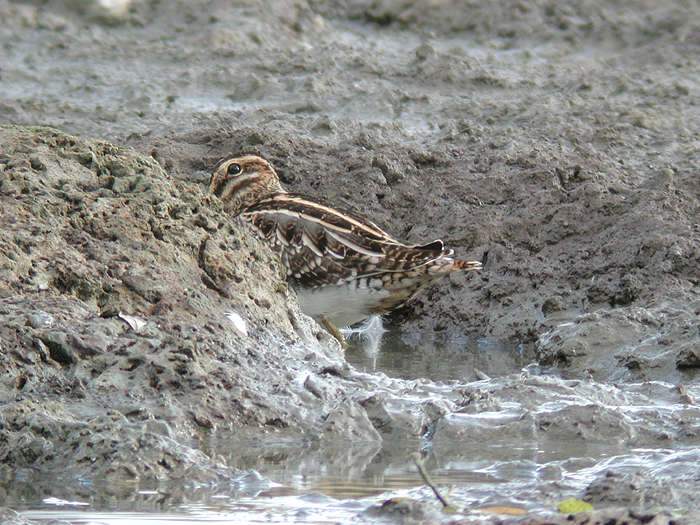
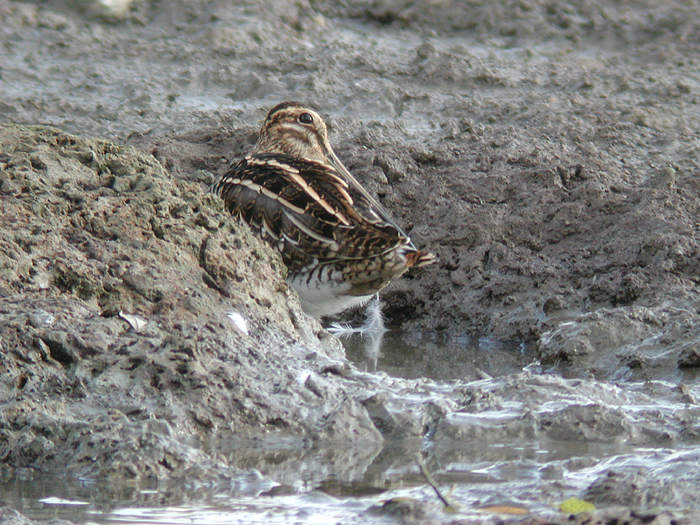
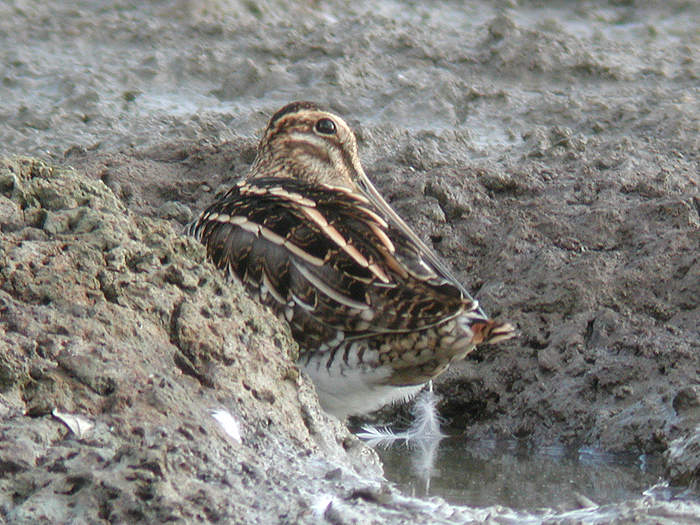
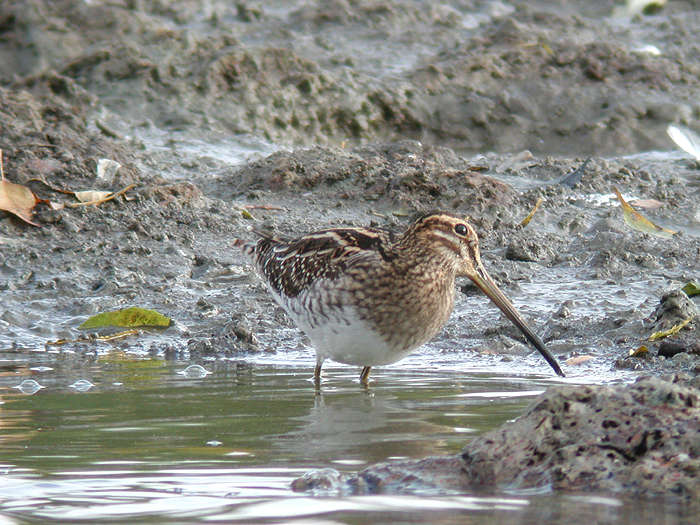
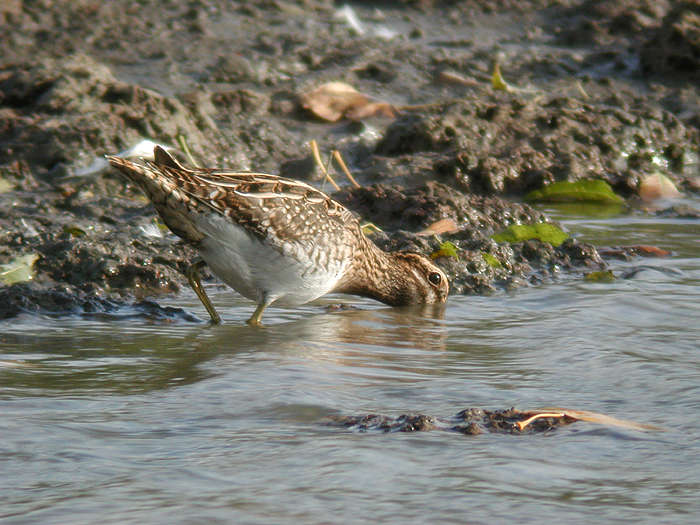
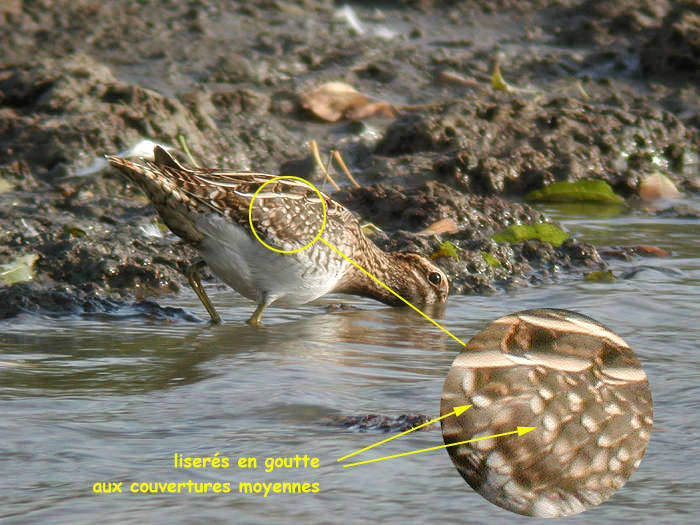
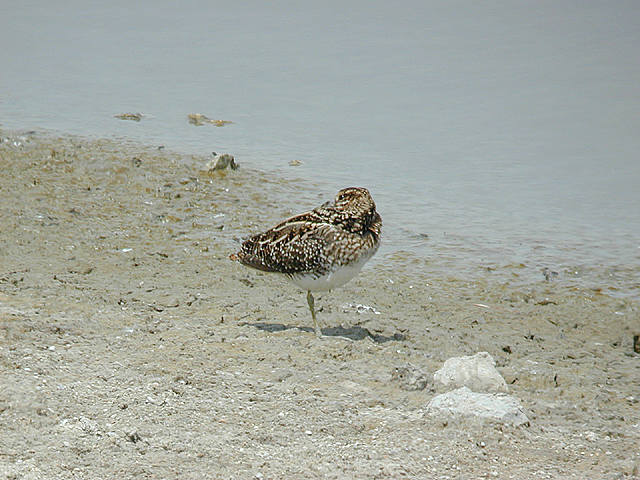
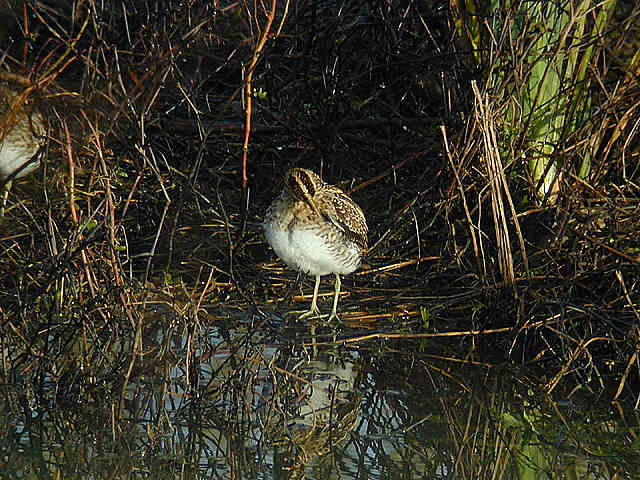
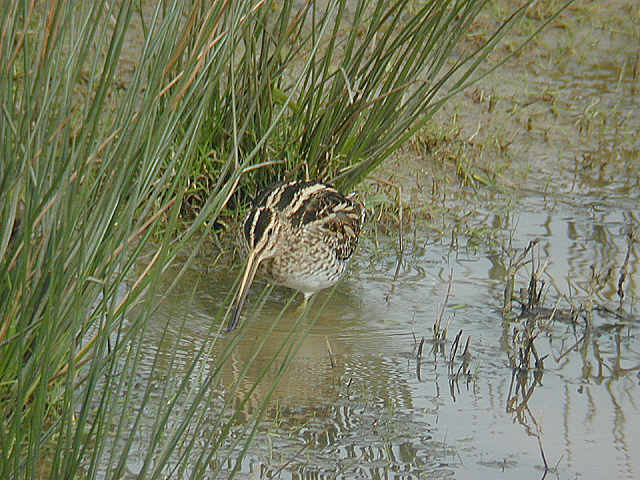
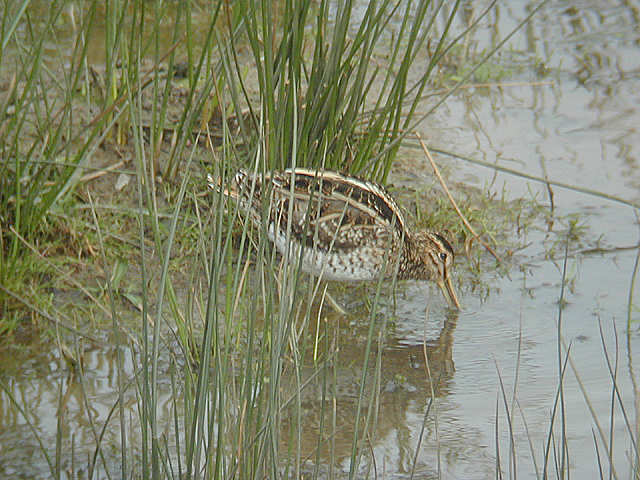
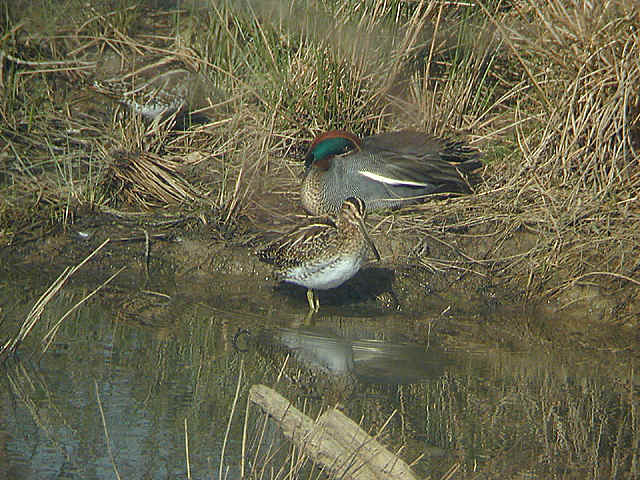
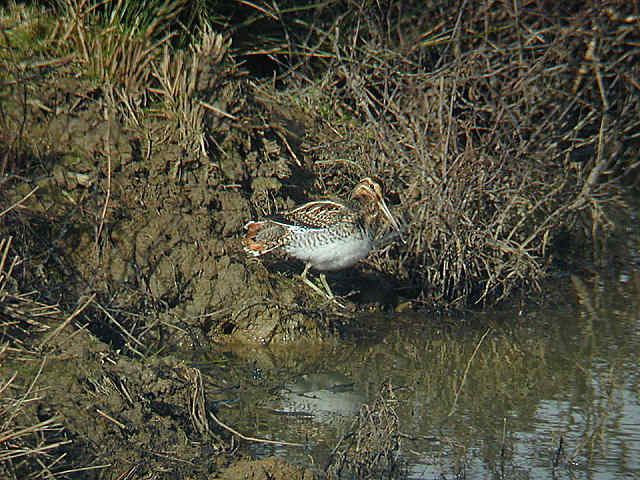
gallinago/faeroeensis, 15 août 2013, Soulaire-et-Bourg
gallina = la poule, gallinago = la bécassine en latin médiéval
Cliquez sur la photo pour l'agrandir
Click on picture to enlarge it
tableau récapitulatif des plumages en fonction de l'âge/age-related table
gallinago/faeroeensis, 15 août 2013, Soulaire-et-Bourg
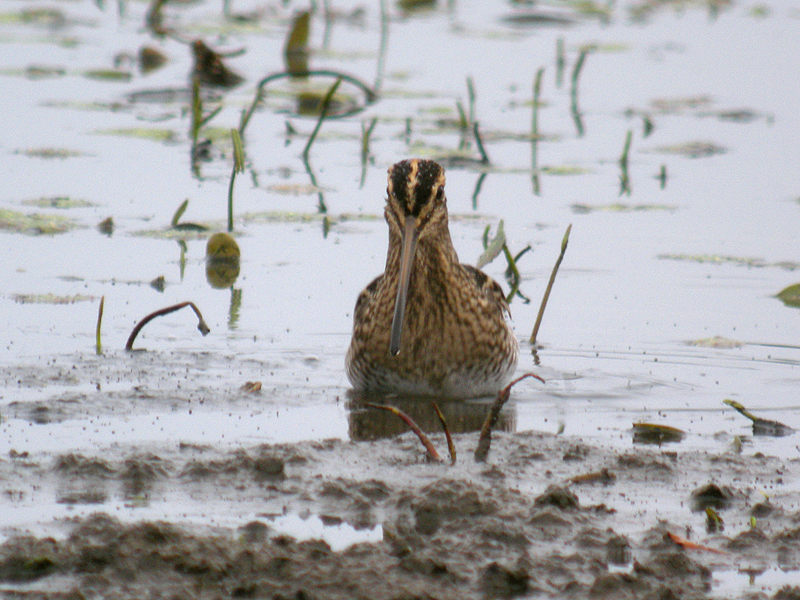
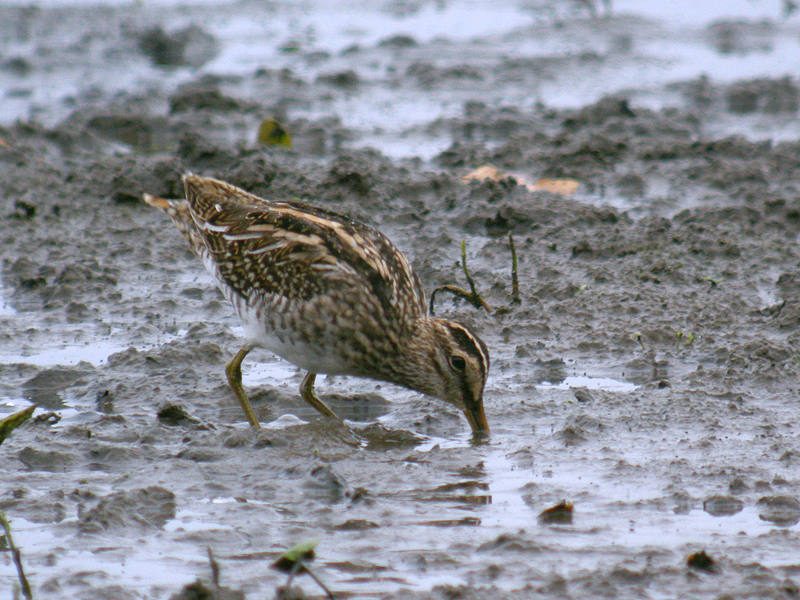
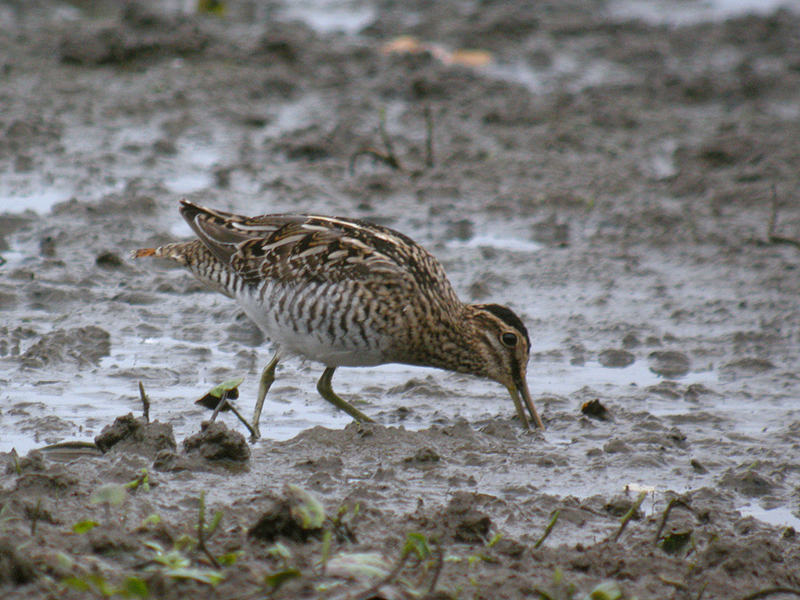
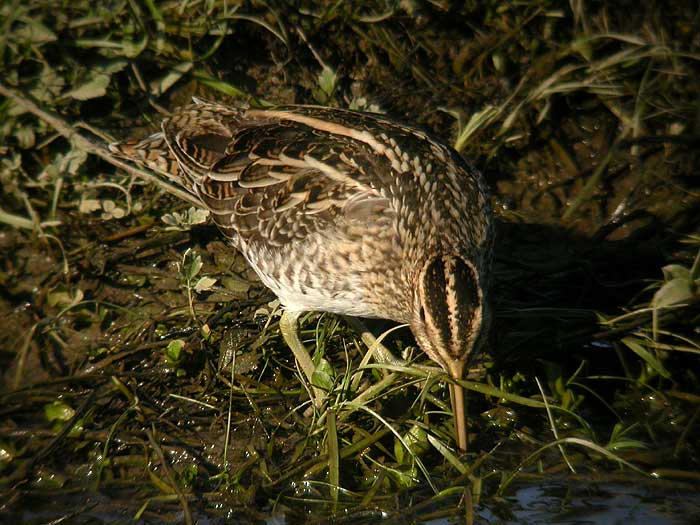
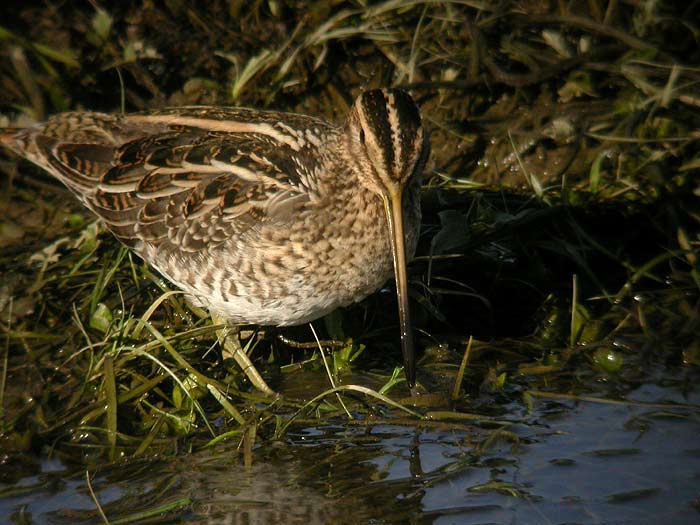
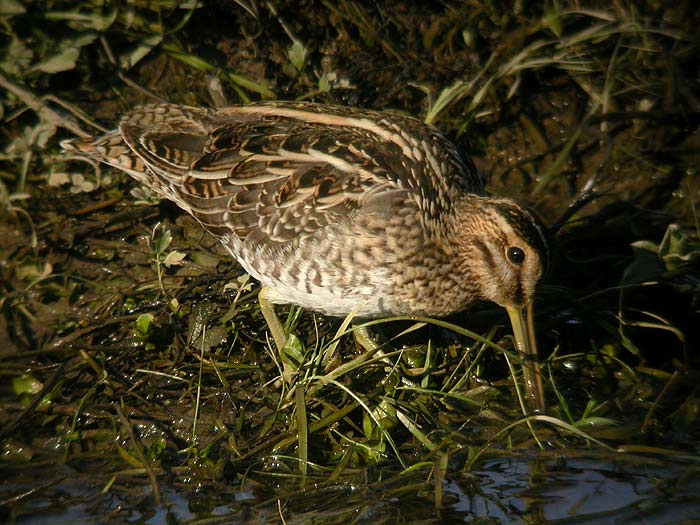
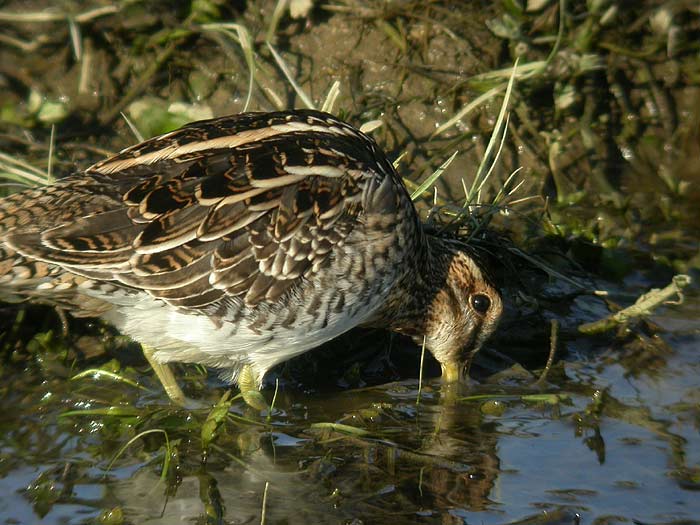
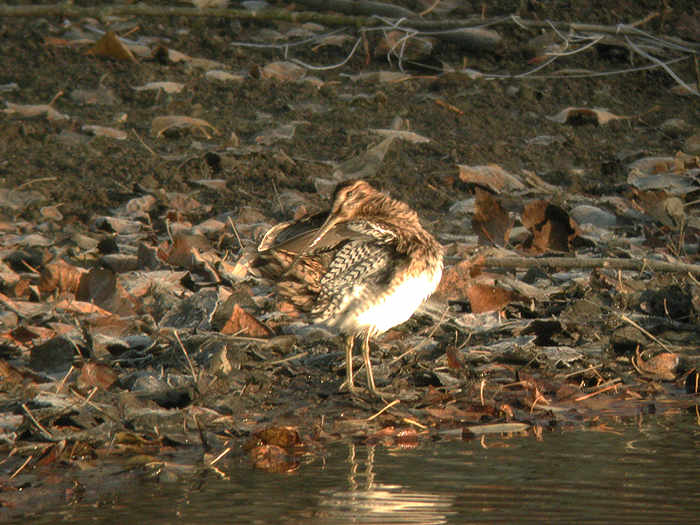
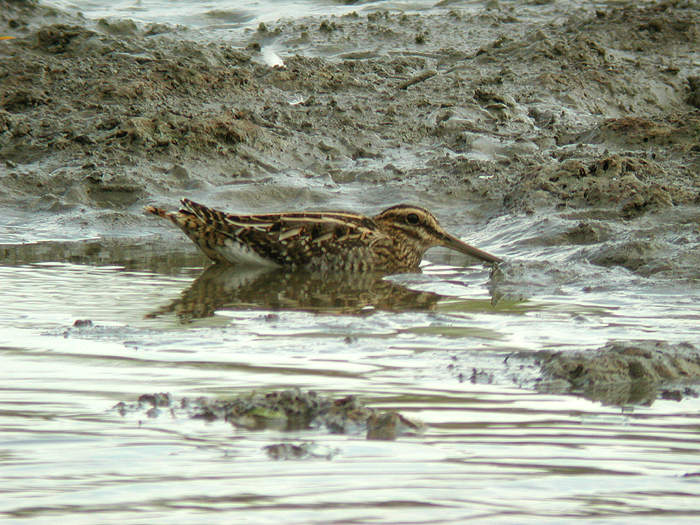
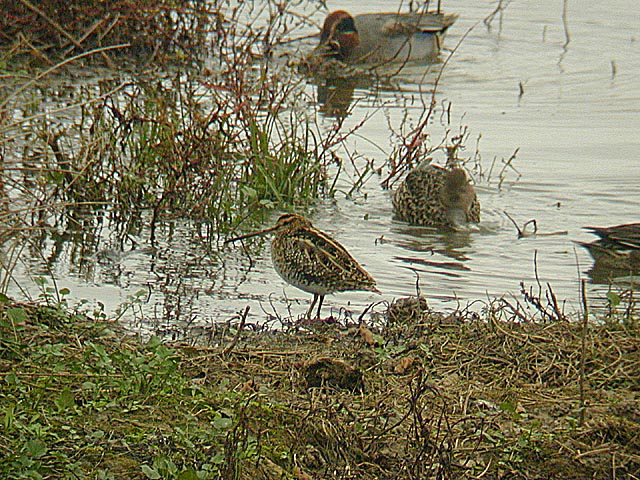
gallinago/faeroeensis, 6 octobre 2009, étang de Chevigné
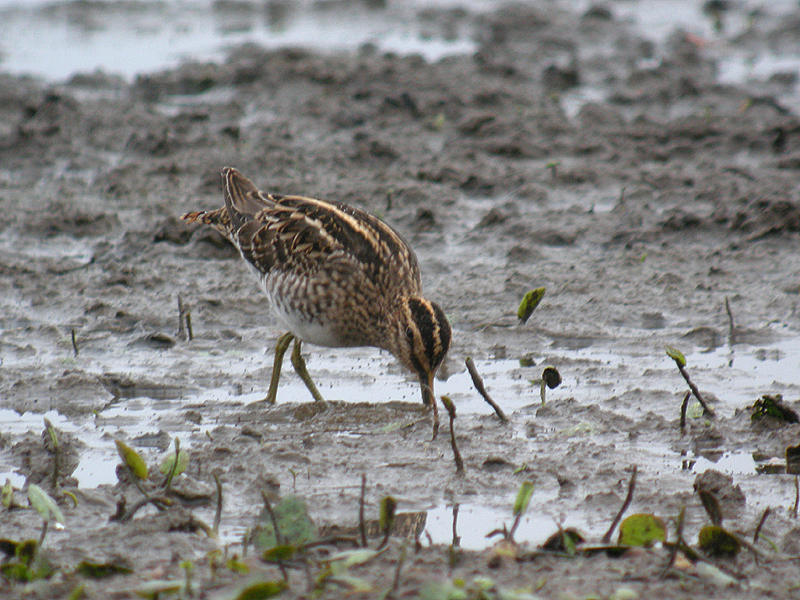
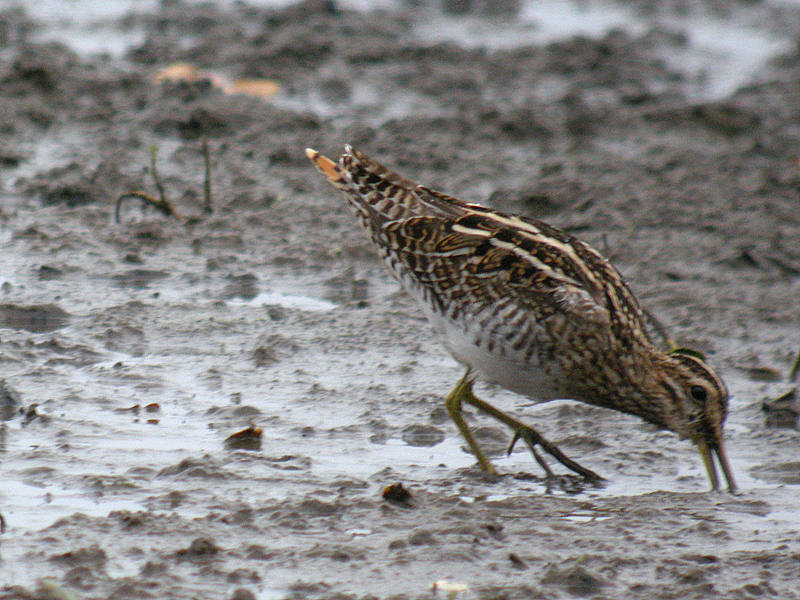
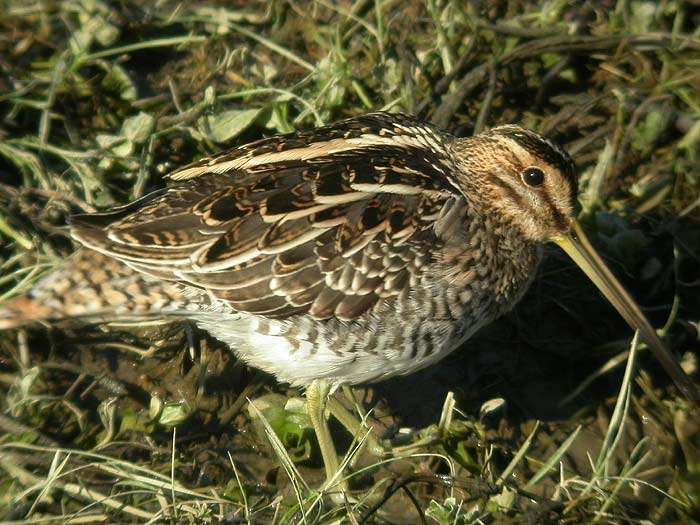
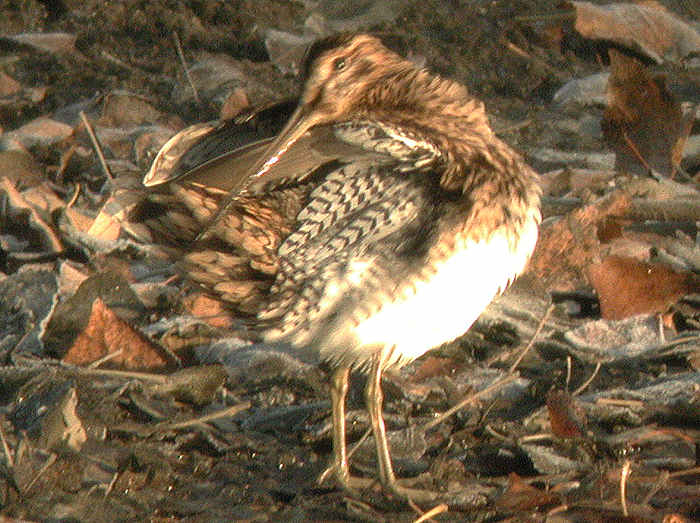
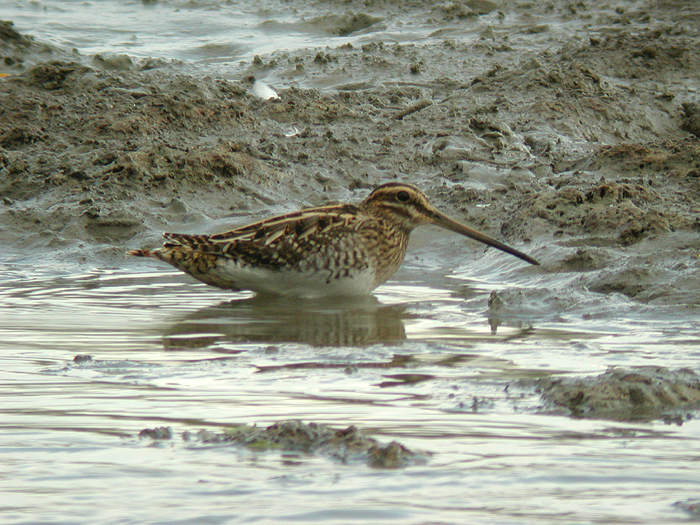
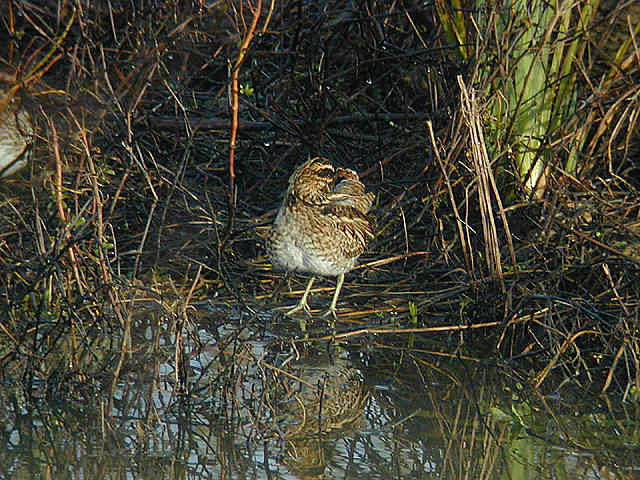
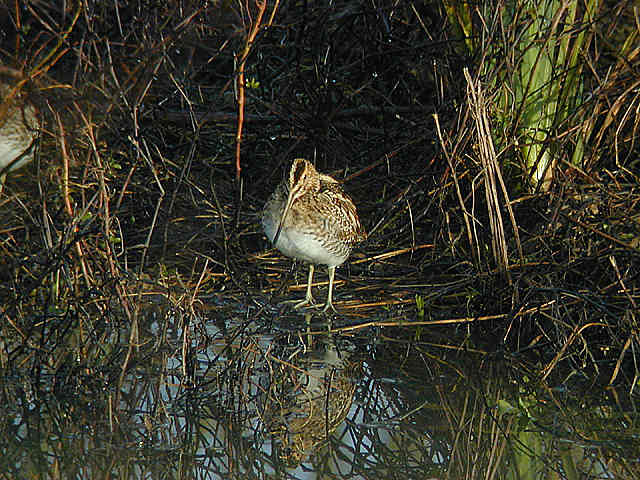
gallinago/faeroeensis, 6 octobre 2009, étang de Chevigné
#1, juvénile, Michael Schmitz : This bird is clearly a juvenile. It is moulting its tertials late as juveniles do. The visible tertial is a remaining juvenile feather. The median coverts are juvenile too. The scapulars are already renewed and show the broad beige fringes typical for adult feathers.
#2, juvénile, Michael Schmitz : These pictures are not very sharp and thus make ageing difficult. The clear-cut dark subterminal band of the tertials, the narrow cream white tip and the dark shaft streak point to a juvenile. The median coverts look adult type, but can well be new at this time of the year. I would conclude that this is a juvenile too.
#3, adulte, Michael Schmitz : This should be an adult (tertials, median coverts), but again the pictures are not very sharp. It might as well be a first year with completed moult.
#4, adulte, Michael Schmitz : In this bird it´s interesting to see that it shows two different generations of coverts (best seen on the second pic): abraded old lesser and median coverts and one fresh median covert. This is typical for an adult, though it is moulting late. The tertials are also adult type.
#5, juvénile ? Michael Schmitz : The only visible tertial has the clear-cut dark subterminal band and cream white tip of a juvenile, the late timing of moult also pointing in that direction. The scapulars are new, but I can´t see much of the coverts, probably rather first year.:
#6 & 7, adultes
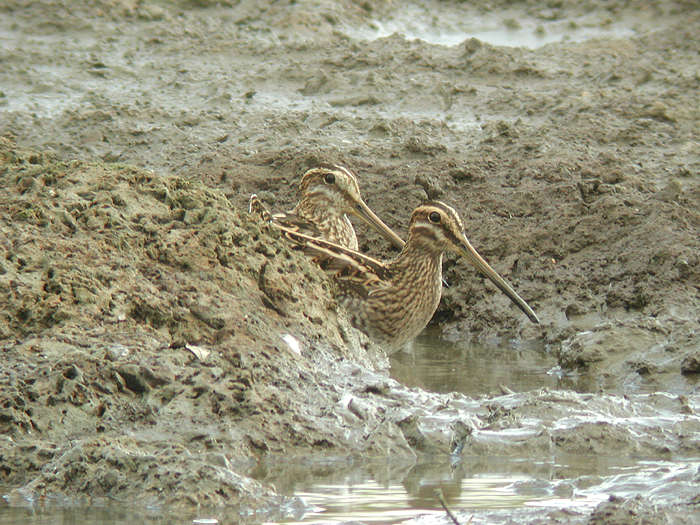
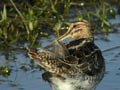
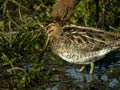
 deux (adultes ?) gallinago/faeroeensis, 28 février 2005, Soulaire-et-Bourg
#1 :
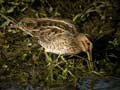
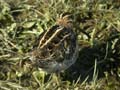
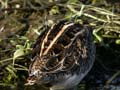
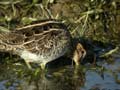
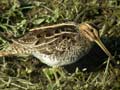
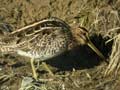
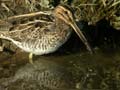
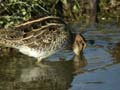
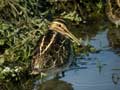
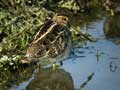
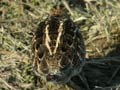
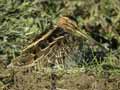
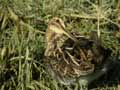
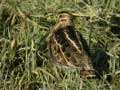
#2 :
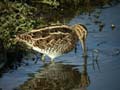
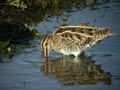
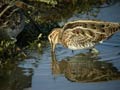
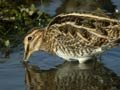
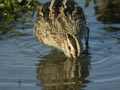
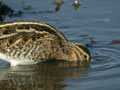
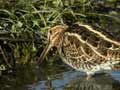
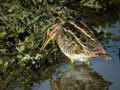
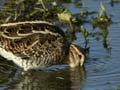
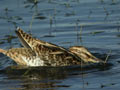
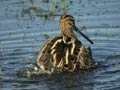
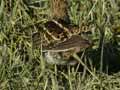
adulte ? gallinago/faeroeensis, 5 novembre 2004, lac de Maine
adulte ? gallinago/faeroeensis, 31 octobre 2004, lac de Maine
recadrée :
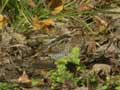
adulte gallinago(/faeroeensis ?), 9 avril 2002, marais salants de Guérande
adulte gallinago/faeroeensis, 16 novembre 2001, lac de Maine
pour les axillaires :recadrée :
adultes gallinago/faeroeensis, 2 octobre 2001, lac de Maine
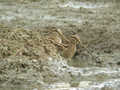
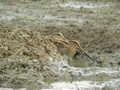
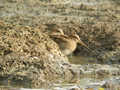
recadrée :
recadrée :
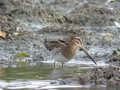
alerte :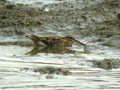
dos :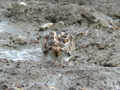
Pourquoi adulte ?
adulte gallinago, 23 mars 2001, Israël
adulte gallinago/faeroeensis, 27-28 janvier 2001, réserve des Barthes
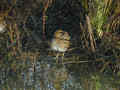
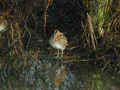
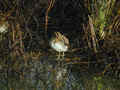
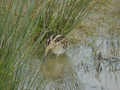
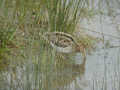
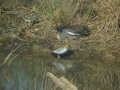
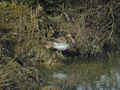
ca 20-50 m, ISO100-200, f4, 1/31 à 214e s, non recadrées
adulte gallinago/faeroeensis, 2 novembre 2000, réserve des Barthes
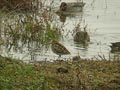
ca 30 m, ISO400, F4, 1/78e s, non recadrée
1re année juvénile/1er hiver |
2e année (2nd-cy) 1er hiver/1er été/2e hiver + |
|
janvier |
|
|
février |
|
|
mars |
|
|
avril |
|
|
mai |
|
|
juin |
|
|
juillet |
|
|
août |
|
|
septembre |
|
|
octobre |
|
|
novembre |
|
|
décembre |
|
|
Soulaire-et-Bourg, Maine-et-Loire (49), 47° 34' 48" N, 000° 33' 06" W, France
accueil | liste chronologique | liste alphabétique | digiscope